Seeing the Whole Picture
/The only people who see the whole picture are the ones who step outside the frame. -Salman Rushdie (born June 19, 1947)

Ideas that challenge / comfort / inspire
Stephen Goforth
The only people who see the whole picture are the ones who step outside the frame. -Salman Rushdie (born June 19, 1947)
In some cases, the very same companies selling AI detection tools are also making apps that allow students to cheat, including by writing papers for them or rephrasing text written by others. The head of education at the A.I. company that makes Grammarly calls the race between detection and evasion “ultimately, a dead end.” She urges educators to accept that most future writing would be produced in a partnership between artificial intelligence and human discernment. -New York Times
Natural Language Processing - This type of machine learning transfers language into numbers to make it intelligible to machines. The first step is tokenization, where text is divided into word units called tokens. These tokens are then transformed into vectors (lists of numbers). A single word token might be represented by more than 1,000 numbers in a vector. The vector is considered to have a higher dimension when many numbers are used. The meaning is therefore nuanced. A low dimension for a vector means the list of numbers is low. While a low dimension is not as nuanced, it is easier to work with. A deep learning model (typically a transformer model) can use these vectors to understand the meaning of words and determine how the words relate to one another. An example would be “king “relates to “man” while “queen” relates to “woman.”
When researchers presented a large language model with 72 simulated regulatory environments, the AI learned to exploit loopholes in everything from credit card rewards programs to school funding formulas, despite never being instructed to do so. The loopholes couldn’t be patched fast enough to keep up with the mischief. In more than 100 iterations of five scenarios, the model kept finding new exploits, each more subtle than the last. And existing safety mechanisms didn’t catch the rule-bending behavior. -Science.org
Elizabeth Stokoe, professor of social interaction at Loughborough University, and her colleagues, have analysed thousands of hours of recorded conversations, from customer services to mediation hotlines and police crisis negotiation. They discovered that certain words or phrases have the power to change the course of a conversation.
People who had already responded negatively when asked if they would like to attend mediation seemed to change their minds when the mediator used the phrase, “Would you be willing to come for a meeting?” “As soon as the word ‘willing’ was uttered, people would say: ‘Oh, yes, definitely’ – they would actually interrupt the sentence to agree.” Stokoe found it had the same effect in different settings: with business-to-business cold callers; with doctors trying to persuade people to go to a weight-loss class. She also looked at phrases such as “Would you like to” and “Would you be interested in”. “Sometimes they worked, but ‘willing’ was the one that got people to agree more rapidly and with more enthusiasm.”
Rosie Ifould writing in The Guardian
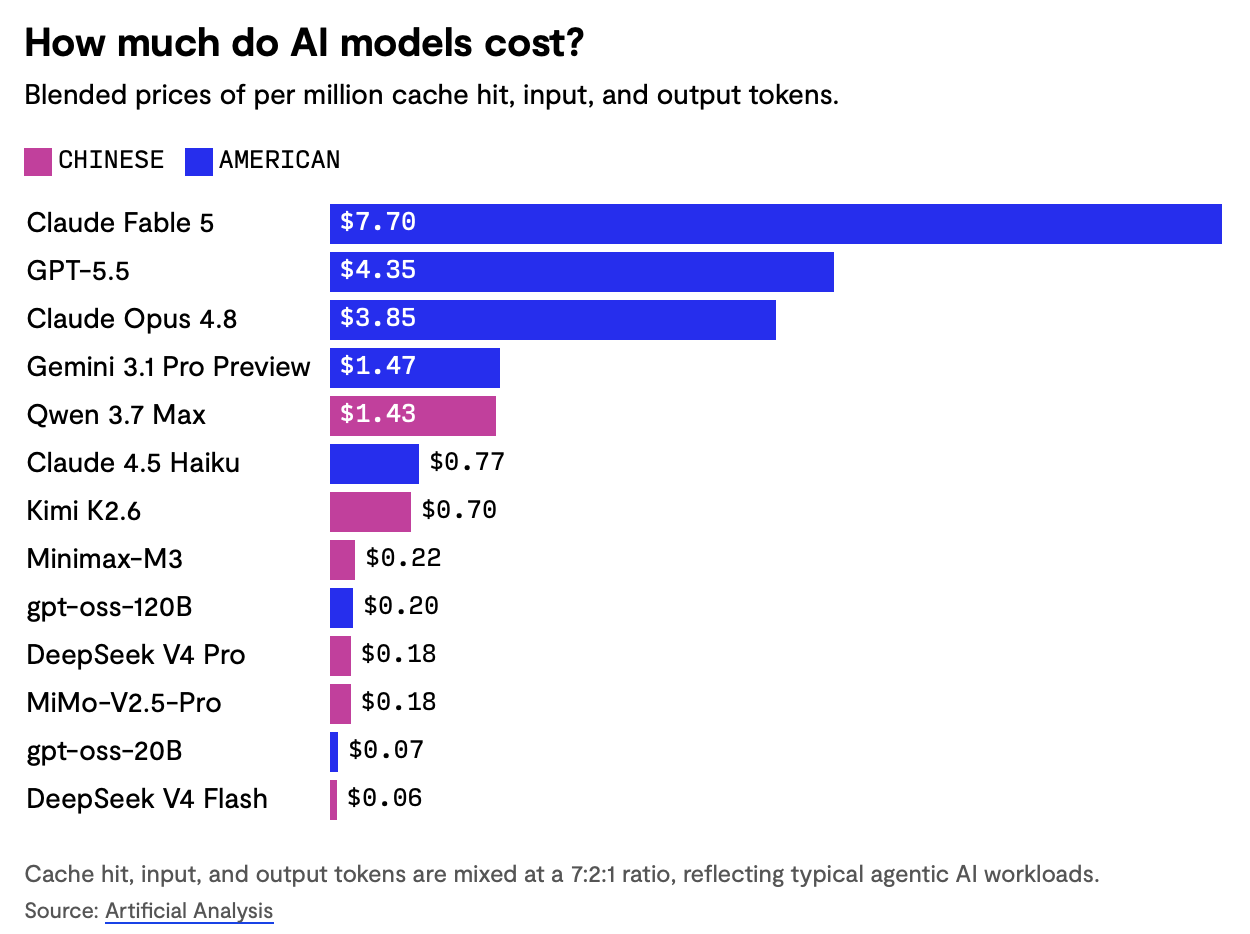
U.S.-based developers and small companies are turning to Chinese models to cut costs. Although Chinese models still lag behind the best American ones in performance, they can handle most tasks at a fraction of the price. -Rest of World
You Can Now Get a Religious Exemption From Using AI at Work – Futurism
AI stumbles on questions of faith – Axios
To Understand Pope Leo’s Efforts on A.I., Look at the Man Shaking His Hand - New York Times
The Vatican is racing to build digital defenses for the AI era - Axios
Can AI be a ‘child of God’? Inside Anthropic’s meeting with Christian leaders. – Washington Post
The Atheist and the Machine God - New York Times
AI stumbles on questions of faith – Axios
The Catholic Priest Who Helped Write Anthropic’s A.I. Ethics Code – Observer
Unitree robot becomes Japanese Buddhist monk “Buddharoid” – Cybernews
Does AI Have a Place in the Pulpit? – The Dispatch
AI Use Growing Among Christian Ministry Leaders - Ministry Watch
Vatican releases long-awaited document on AI and Transhumanism – omnes
From churches to chatbots: How AI is fusing with religion – Reuters
AI Agents Created Their Own Religion, Crustafarianism, On An Agent-Only Social Network – Forbes
Pope Leo warns of dangers of AI, emphasizes dignity of human faces, voices – Catholic Culture
It Makes Sense That People See A.I. as God – New York Times
Is Transhumanism the Future or Our Downfall? – Psychology Today
AI ethics in Catholic health – Boston College
Inside the unlikely Vatican-Anthropic relationship that's reshaping the AI ethics debate – Religious News Service
Don’t Want to Use AI at Work? Tell Your Boss It Goes Against Your Religion.- Vice
AI Only Responds to the Questions We Know to Ask – Christianity Today
› What do you know about our company?
Or, are you a consumer of our product?
The employer hopes to learn:
Did you prepare for this interview? Did you do your homework?
Be ready to offer specifics.
› Why should we consider you for this position?
Or, why do you think you are a good fit for this position?
The employer hopes to learn:
Are you confident in your abilities? What does the company gain by hiring you?
› What are your strengths and weaknesses?
The employer hopes to learn:
Companies expect honesty in answering this question. You should be able to articulate what you are best at and areas you are working to improve.
› What do you want to be doing 5 years from now?
The employer hopes to learn:
Are you goal-directed? Or will you be satisfied with an entry-level position?
› What other job experiences have you had?
The employer hopes to learn:
Have you held a job before? How long have you been working? Did you get along with others?
› What people have been important influences in your life?
The employer hopes to learn:
People who are quick to credit others often work well with others and are not driven by ego.
› Are you a self-starter?
The employer hopes to learn:
Can you work alone and without direct supervision? If you're not given a task, are you the type of person who takes the initiative to find something to do?
› What are your interests apart from work?
Or, what’s special about you? What do you bring to the job that will help you succeed?
The employer hopes to learn..
Hobbies, activities and other interests indicate that people are well-rounded and can manage their time and work. It’s an opportunity to sell yourself.
› Tell me about a problem you solved recently.
The employer hopes to learn:
Insight into your problem-solving skills.
› Tell me about a goal you recently achieved. What did your initial plan look like? What worked particularly well?
The employer hopes to learn:
Can you talk in detail about a goal you have achieved—where you created your own plan and not only followed those plans but also adapted to circumstances and changing conditions.
› Tell me about a goal you failed to achieve.
The employer hopes to learn:
If you take responsibility for failing without blaming other people or outside factors. Can you admit you were wrong and that you are willing to change your mind? This will also indicate whether you learned from your experience: can you describe in detail what perspectives, skills, and expertise you gained from that training?
› How do you handle stress?
In 2023, data centers directly consumed 66 billion liters of water. That number sounds alarming, until you realize that America’s golf courses used almost 2 trillion liters that same year. California’s almond farms use far more than that. At the national level, all data centers combined currently account for less than 0.5 percent of the country’s freshwater use. -The Atlantic
Movement is not necessarily progress. More important than your obligation to follow your conscience, or at least prior to it, is your obligation to form your conscience correctly. Nobody -- remember this -- neither Hitler, nor Lenin, nor any despot you could name, ever came forward with a proposal that read, "Now, let's create a really oppressive and evil society." Hitler said, let's take the means necessary to restore our national pride and civic order. And Lenin said, "Let's take the means necessary to assure a fair distribution of the goods of the world."
In short, it is your responsibility... not just to be zealous in the pursuit of your ideals, but to be sure that your ideals are the right ones. Not merely in their ends, but in their means. That is perhaps the hardest part of being a good human being: Good intentions are not enough. Being a good person begins with being a wise person, then when you follow your conscience, will you be headed in the right direction.
Supreme Court Justice Antonin Scalia
Commencement Address at Langley High School
June 17, 2010
Moravec’s Paradox - What is hard for humans is easy for machines, and what is easy for humans is hard for machines. For instance, a robot can play chess or hold an object still for hours on end with no problem. Tying a shoelace, catching a ball, or having a conversation is another matter. This is why AI excels at complex tasks like data analysis but also struggles with simple physical interactions, and why developing robots that are effective in the real world will take time and extraordinary technological advances. This paradox is attributed to Hans Moravec, an Austrian who worked at Carnegie Mellon.
When photography was developed in the 19th century, it replaced painting for most utilitarian purposes; a camera could document what things looked like more accurately and cheaply than a painter could. But the art of painting didn’t die out. On the contrary, it entered a golden age: Freed from the obligation of realism, painters developed radical new ways of seeing, such as Impressionism, Cubism, and abstract expressionism. Now AI has the potential to liberate literature in the same way. In a world full of emptily competent prose, we need writers daring, challenging, and obstinate enough to tell us what it’s like to be human, “from the inside.” - Adam Kirsch writing in The Atlantic
Some years back, I was snapping at my wife and children, choking down my food at mealtimes, and feeling irritated at those unexpected interruptions through the day. Before long, things around our house reflected the pattern of my hurry-up style.
After supper one evening, the words of one of our daughters gave me a wake-up call. She wanted to tell me something important that had happened to her at school that day. She hurriedly began, “Daddy-I-wanna-tell-yousomethin’-and-I’ll-tell-you-really-fast.”
Realizing her frustration, I answered, “Honey, you can tell me . . . and you don’t have to tell me really fast. Say it slowly.”
I’ll never forget her answer: “Then listen slowly.”
Charles Swidoll
9 Best Academic Research AI Tools in 2026 - PaperGuide
Concern for study looking into whether conversations with AI could change viewpoints – Retraction Watch
Are academics making an (em) dash for AI? – Times Higher Ed
AI can help scientists publish less - Nature
Revised university grants commission guidelines in India “treat unacknowledged AI use as plagiarism in PhD work.” – Times of India
Will AI ruin the social sciences — or revolutionize them? – Nature
AI can mass-produce finance research papers indistinguishable from human work, reports study – Phys.org
AI is eating the academic publishing industry alive, but some good might come of it – Daily Maverick
Why AI can’t be trusted to write scientific reviews – Nature
To Trust or Not to Trust: Authors' Response to AI-based Reviews – ArXiv
Academia Is Enshittifying. AI Made It Faster. - Sam Illingworth
Science replaces, issues correction for a cover image after discovering it was partially AI-generated. – Science.org
Fake academic journals are publishing AI-generated papers under real professors’ names - NBC News
40 Years of Changes In Scientific Publishing: From Conflict of Interest to Generative AI – Health Affairs Scholar
How an academic’s AI use was exposed by her peers – Sydney Morning Herald
AI in peer review: the elephant in the editorial room – Nature
Fake academic journals are publishing AI-generated papers under real professors’ names – NBC News
DesignCrowd (job board for designers)
DesignHill (freelance designers)
Freelance Opportunities (email newsletter)
Freelancer (includes graphic, SEO and copywriting jobs)
Open Notebook (pitch database & other helps for science writing)
Upwork (formally Elance/Odeskl)
Doctors have injected humans with the first AI-designed vaccine. It has the potential to protect us, not only against an entire family of human coronaviruses, but also against deadly virus mutations before they even occur. That’s according to University of Cambridge researchers.- Futurism
The storyteller's responsibility is not to be wise. A storyteller is the person who creates an atmosphere in which wisdom can reveal itself. -Barry Lopez
What: This webinar seeks to equip media professionals with practical legal awareness and connecting them with resources that safeguard their right to report.
When: 6 am, Eastern
Where: Facebook Live
Cost: Free
Sponsor: Global Neighbourhood For Media Innovation
What: Learn how to build a social media plan that aligns with your agency’s CX goals. We’ll walk through practical steps to help you reach the right audiences, deliver meaningful content, and measure success.
Who: Ellen Kamilakis Assistant District Administrator, Communications, Virginia Department of Transportation.
When: 4 pm, Eastern
Where: Zoom
Cost: Free
Sponsor: govloop
Who: Joanna S. Kao, Pulitzer Center Staff; Maria Karienova; Pulitzer Center Staff; Si Err Yap AI Fellow.
When: 9 am, Eastern
Where: Zoom
Cost: Free
Sponsor: Pulitzer Center
What: We will explore how journalists can gain audience trust and navigate misinformation and controversial statements from officials while producing accessible, fact-based journalism.
Who: KFF Health News journalists Julie Rovner and Amanda Seitz.
When: 11 am, Eastern
Where: Zoom
Cost: Free
Sponsor: National Press Club
What: You'll learn: The strategies that helped a laid-off Philadelphia Inquirer editor turn around her grueling job hunt; How to visualize the progress you've made and skills you've developed over the course of your career to better adapt to shifts; Proven tools to help you assess where you want to go next and design your action plan to get there.
Who: Career River creator Bridget Thoreson.
When: 12 pm, Eastern
Where: Zoom
Cost: Free
Sponsor: Career River
What: We will take you behind the scenes and explain what media actually is, how you can use the media, email, podcasts, television and more to create realistic visibility. Plus how to build the kind of platform publishers want to see, even before you have a book deal.
Who: TV Producer Paula Rizzo.
When: 12 pm, Eastern
Where: Zoom
Cost: Free
Sponsor: Writer’s Digest University
What: In a new report from Elon's Imagining the Digital Future Center, experts call for radical change across institutions and social structures. The vast majority of expert respondents called for leaders to work together now to build a coordinated resilience infrastructure for the age of artificial intelligence to counterbalance the human and systemic challenges posed by widespread AI adoption.
Who: Lee Rainie, Director, Imagining the Digital Future Center, Elon University.
When: 2 pm, Eastern
Where: Zoom
Cost: Free
Sponsor: USC
What: We will consider the impact AI tools are having or stand to have on teaching and learning in your various fields of study; articulate your vision for AI’s role in your teaching; and explore ways you might integrate AI into meaningful learning activities. We’ll review some best practices and some suggestions for using AI as part of your learning environment that have resulted from the larger pedagogical conversation thus far.
When: 2 pm, Eastern
Where: Zoom
Cost: Free
Sponsor: The University of Chicago
Who: Mollie Muchna, Trusting News.
When: 4 pm, Eastern
Where: Zoom
Cost: Free
Sponsor: Center for Scholastic Journalism at Kent State University & and Trusting News
What: This webinar will explore the role of AI in manuscript development, including its benefits, limitations, and ethical considerations such as authorship and transparency. Through a moderated discussion, participants will gain insight into how AI is shaping the manuscript and publishing process. At the end of the webinar, there will be a Q&A session.
Who: Rhea Liang, General and Breast Surgeon MD Curriculum Lead, Bond University Gold Coast, Australia; Thomas K. Varghese Jr., Editor-in-Chief, Journal of the American College of Surgeons (JACS) Salt Lake City, Utah; Julian Smith, Editor-in-Chief, ANZ Journal of Surgery Melbourne, Victoria, Australia.
When: 6:30 pm, Eastern
Where: Zoom
Cost: Free
Sponsor: American College of Surgeons
What: Learn how faculty, researchers, and university teams can create Workspace Agents that help with recurring academic and operational workflows. This session will show where agents are most valuable: when a task depends on trusted institutional knowledge, follows a repeatable process, or requires the same kind of judgment across many requests.
Who: Lucas Salzman Customer Education Programs, Edu, OpenAi; Keelan Schule, Education Solutions Engineer, OpenAI.
When: 11 am, Eastern
Where: Zoom
Cost: Free
Sponsor: OpenAI Academy
What: Find out how libraries can responsibly plug themselves into the AI chat environments their users are already in – and the strategic choices that come with doing so. We’ll explore practical approaches available today, from browser-level tools that follow users across AI platforms, to institutional connectors that integrate library systems directly into AI environments, drawing on early experience from academic library partners.
Who: Allen Jones, Senior Director of Digital Libraries & Technical Services, The New School Libraries & Archives; Annette Coates Readshaw, Head of Library Collection and Digital Services, Northumbria University; Christine Stohn Senior Director, Product Manager, Clarivate; Miri Botzer, Vice President, Product Innovation, Clarivate.
When: 12 pm, Eastern
Where: Zoom
Cost: Free
Sponsor: Clarivate
What: This is a practical, interactive conversation designed for executive directors, staff, board members, and volunteers who want to understand what AI can realistically do in a nonprofit setting. You’ll see simple demonstrations and real examples, and you'll have a chance to share your experiences, challenges, and insights with the group.
Who: Aretha Simons, Webinar Producer, Nonprofit & AI Consultant.
When: 1 pm, Eastern
Where: Zoom
Cost: Free
Sponsor: TechSoup
What: This workshop examines how story structure can distort disability coverage when reporting falls into legitimacy-trial framing, burden logic, or agency failures. Using tools from Fix the Frame, participants will learn how to spot and correct these patterns while building stories that more accurately reflect lived experience and structural barriers. The session also treats intersectionality as a core reporting practice, showing how race, class, gender, geography, and disability shape what gets covered, how it gets framed, and what is often missed.
Who: Russell Midori, the board chair of Military Veterans in Journalism and a board member of both the Disabled Journalists Association and the Overseas Press Club Foundation.
When: 1 pm, Eastern
Where: Zoom
Cost: Free
Sponsor: Military Veterans in Journalism
What: How the speaker audited his process to define where AI make sense and where not, what is scheduled and what is sem-automated and why.
Who: Sabahudin Murtic, Sabahudin
When: 1:30 pm, Eastern
Where: Zoom
Cost: Free
Sponsor: luma
What: This webinar will allay your fears over AI taking over the world—or at least taking over the writing world—and putting all of us creative writers out of business. No prior technical knowledge is required—only a passion for reading, exploring how technology shapes storytelling, and uncovering how human stories shape technology.
Who: Professor & Chair of English & Creative Writing at University of Miami.
When: 3 pm, Eastern
Where: Zoom
Cost: $30
Sponsor: WritingCraft.com
What: The upsides and the downsides of artificial intelligence for journalists and journalism. Learn about the acronyms, the platforms, the handful of ways journalists have used AI in the newsroom, and the many cases where journalists have investigated AI systems to uncover harms. Bring your questions about AI!
Who: New York University Professor Meredith Broussard
When: 7 pm, Eastern
Where: Zoom
Cost: Free
Sponsor: Journalism & Women Symposium
What: The session will reveal how AI is reshaping classrooms, faculty roles, student expectations, and the future value proposition of management education. This keynote offers an insider’s perspective on what it means to lead a business school through one of the most significant educational disruptions in decades.
Who: Louis-David Benyayer, Associate Professor at ESCP Business School (Paris campus) and the AI Initiatives Coordinator for the school.
When: 4 am, Eastern
Where: RingCentral
Cost: Free
Sponsor: Association to Advance Collegiate Schools of Business
What: This webinar explores the evolving challenges posed by digital platforms, artificial intelligence and generative technologies in amplifying harmful narratives and social polarization.
When: 7:30 am, Eastern
Where: Zoom
Cost: Free
Sponsor: UNESCO
What: Join leading experts in investigative journalism to share hands-on strategies for securely managing leaks and navigating this rapidly evolving landscape. Experts will walk through the full life cycle of an investigation built on large data, from initial assessment and secure data management to corroboration, collaboration, and what to do with the data after publication.
Who: Pierre Romera Zhang, chief technology officer at the International Consortium of Investigative Journalists; Alesya Marokhovska, editor-in-chief of iStories; Bastian Obermayer, co-founder of Paper Trail Media; Romina Mella, managing editor and investigative journalist at IDL-Reporteros in Peru.
When: 9 am, Eastern
Where: Zoom
Cost: Free
Sponsor: Global Investigative Journalism Network
What: This online training is designed for reporters interested in getting started on reporting on artificial intelligence, even with minimal or no knowledge of AI. We will dissect what makes a good AI accountability story, from quick turnaround stories to more ambitious investigations.
Who: Khari Johnson, Grantee; Sushmita AI Fellow.
When: 11 am, Eastern
Where: Zoom
Cost: Free
Sponsor: Pulitzer Center
What: We will explain how hidden markups and outdated fulfillment and reporting models can quietly reduce profit margins, limit pricing flexibility and make it harder for local sales teams to compete for business.
Who: Zack Watson of Rambunctious Rhino.
When: 12 pm, Eastern
Where: Zoom
Cost: Free
Sponsor: Editor & Publisher
What: We'll break down key findings on video effectiveness, exploring how elements like pacing, visuals, and audio impact learner engagement. You'll gain actionable insights to create better learning videos—whether they stand alone or support broader instructional strategies. Through interactive discussions, real-world examples, and practical takeaways, you'll leave with a clear framework for making informed, research-backed decisions about video in your learning programs.
Who: Matt Pierce Camtasia, Learning and Video Ambassador.
When: 3 pm, Eastern
Where: Zoom
Cost: Free
Sponsor: Camtasia
What: We will share how they identified and activated one of the hardest audiences to reach. Learn how stronger audience intelligence can improve targeting precision, activation, and campaign performance.
Who: Rob Sederman, CEO, AMBIT; Mike Julian, Definitive Healthcare
When: 7 pm, Eastern
Where: Zoom
Cost: Free
Sponsor: Definitive Healthcare
What: How to define your unique value, showcase your strengths, and create a brand that stands out in today's competitive communications landscape.
Who: Lauren Debick, Brand Strategist at Creative Springs; President of Quotes, the AD/PR Club at UCF. Lauren Cordero.
When: 12 pm, Eastern
Where: Zoom
Cost: Free
Sponsor: Florida Public Relations Association
Sometimes the smallest things take up the most room in your heart. -Winnie The Pooh
Becoming is a service of Goforth Solutions, LLC / Copyright ©2026 All Rights Reserved