
Unresolved Copyright & AI Questions
/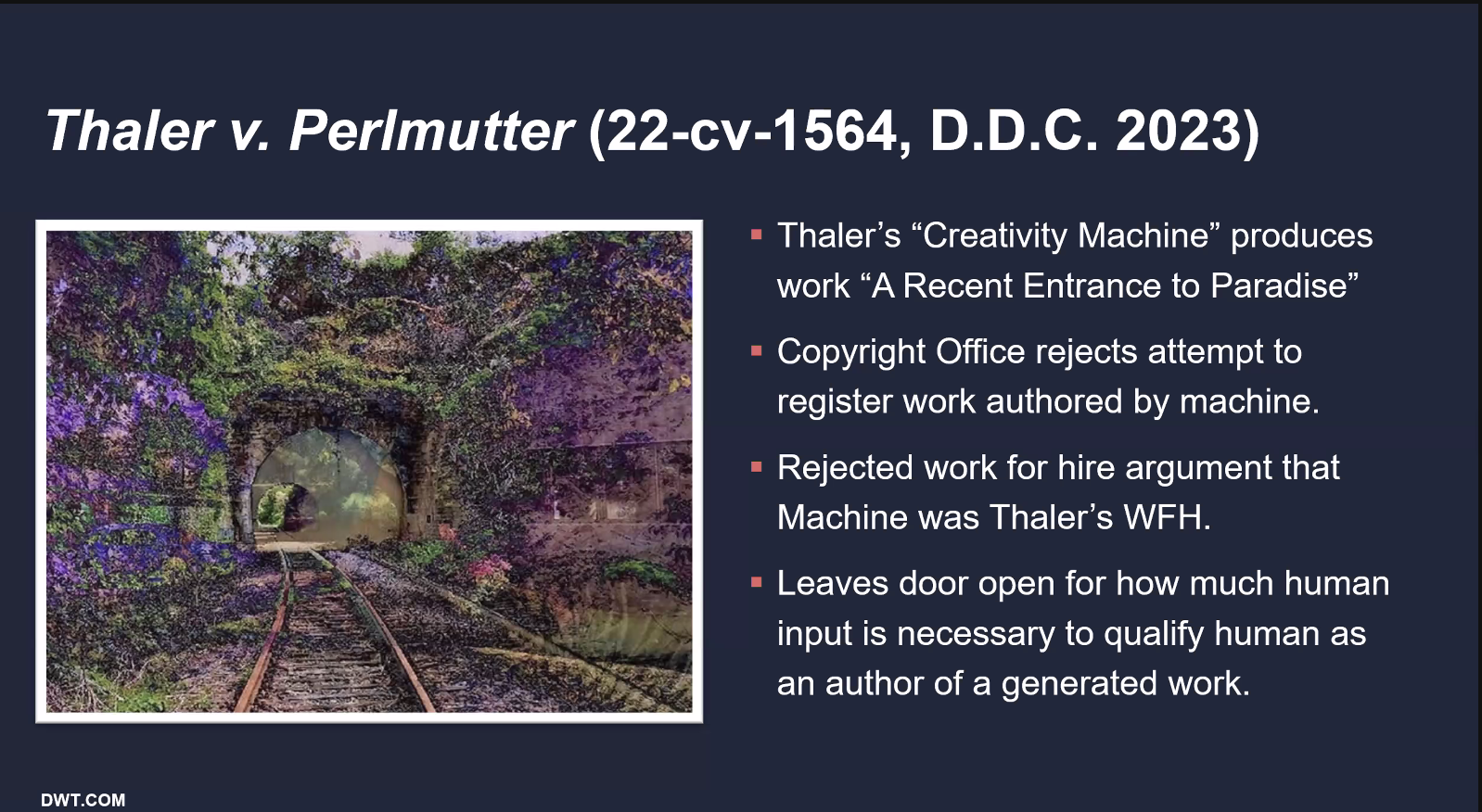
In March 2026, the Supreme Court declined to hear Thaler v. Perlmutter.
This leaves in place the D.C. Circuit’s March 2025 ruling.
There was no ruling on the merits. This doesn’t set precedent.
Stephen Thaler listed his AI system as the sole author, disclaimed any human creative contribution, and asked for copyright protection anyway. The DC court said no.
The D.C. Circuit held that copyright law requires a human author, which did not disqualify using AI assistance.
Questions not resolved:
1. How much Human involvement is enough?
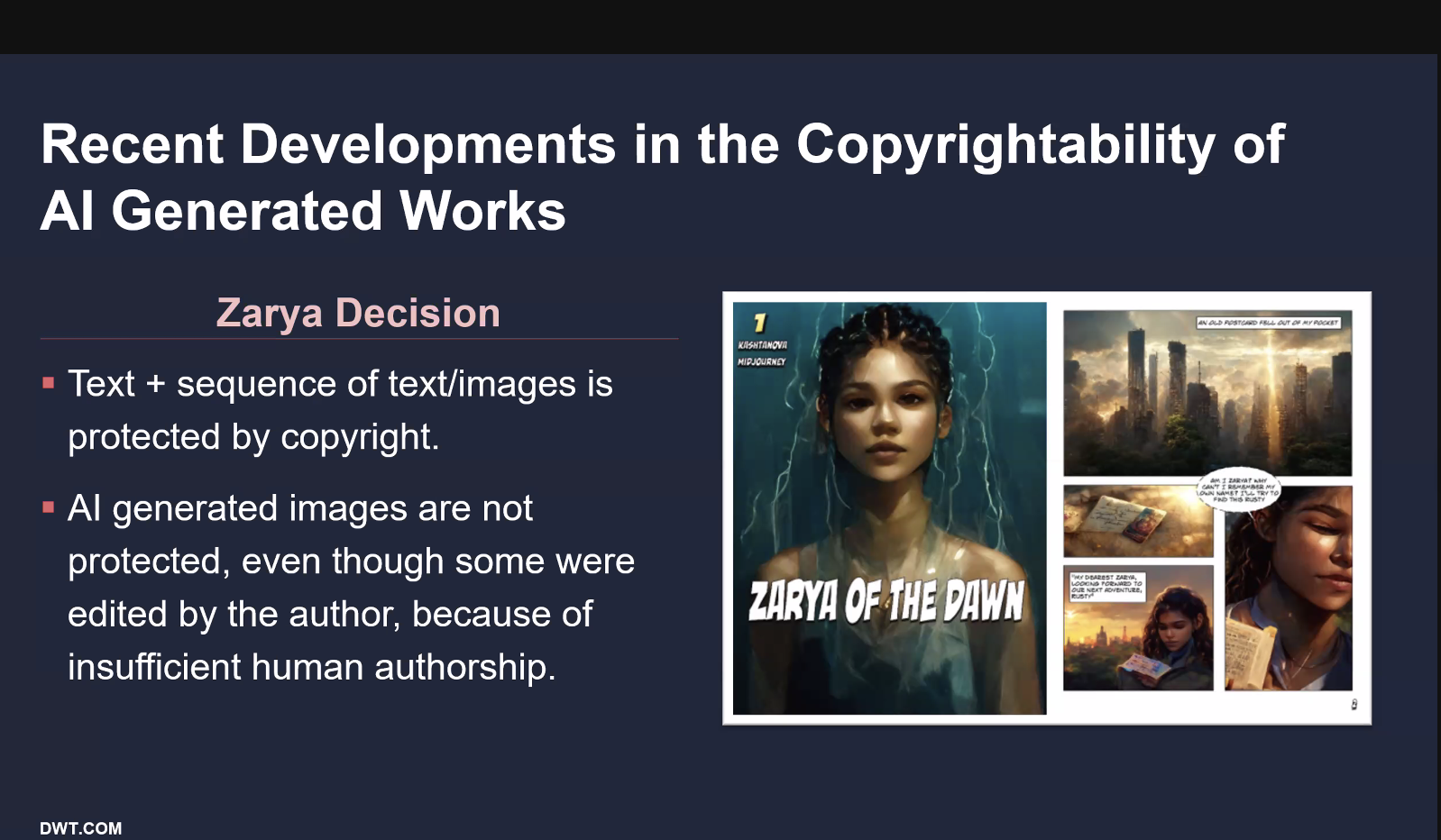
The US Copyright Office said in its “Zarya of the Dawn” comic book registration decision that the AI- images weren’t protectable, but the human-authored text and the selection and arrangement of text and images were. So far, the Office has said that prompts are not copyrightable—prompting is more like giving instructions to a commissioned artist than actually determining the expressive content of the final image. But what if dozens, even hundreds of prompts are entered? Wouldn’t that involve substantial human effort, iterative refinement, and a creative vision? The Copyright Office says getting different results from the same prompt is proof the user isn’t controlling the expression. The underlying question is this: Is prompting closer to authorship or closer to curation?
2. Can you prove what you Contributed?
If your work incorporates more than a de minimis amount of AI-generated material, the Copyright Office requires a disclosure statement about the AI involvement and a description of your human contribution. This means the creator must keep files, prompts, drafts, notes on what was intended and layered edits—in case there is a need to prove exactly what the human contribution was. A copyright applicant can avoid this simply by not disclosing the AI use. The system, in effect, rewards silence.
3. What Happens When Uncopyrightable AI Output Gets Licensed Anyway?
AI-generated materials are already being licensed, bundled, and sold. An example: Someone took a Python library and used an AI coding agent to rewrite it, then changed the project’s license to a more permissive one. The original creator objected, saying the original license still applied.
4. AI Output Can Absolutely Infringe. So Now What?
The SCOTUS denial also prompted a wave of commentary suggesting that AI-generated works now exist in some kind of copyright-free zone. They don’t. Issues still on the table: Whether AI-generated summaries of news articles are substitutive enough to infringe, and whether AI-generated narrative retellings of novels cross the line from ideas to expression. One judge dismissed claims that AI bullet-point summaries of investigative journalism were substantially similar to the originals. The same judge allowed a lawsuit to proceed because ChatGPT’s summary of a novel was might have captured the “overall tone and feel” of the original work.
Bottom line: Millions of people are using AI tools every day without knowing whether what they’re making is protectable, infringing, both, or neither.
Thaler Is Dead. Now for the AI Copyright Questions That Actually Matter